ADASH A4900 VIBRIO M
Vibration Meter, FFT Analyzer, and Data Collector in One Powerful Device. Designed for predictive maintenance, machine diagnostics, and industrial condition monitoring.
Learn More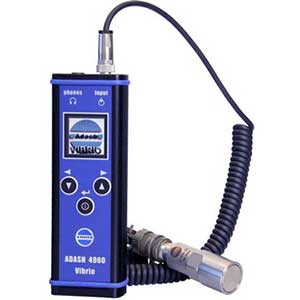
Professional Vibration Analysis Made Simple
The ADASH A4900 Vibrio M is a professional portable vibration analyzer designed for maintenance engineers, reliability teams, and condition monitoring specialists. This advanced device combines vibration measurement, FFT spectrum analysis, data collection, temperature monitoring, and fault diagnostics in a single handheld unit.
Built for industrial environments, the Vibrio M helps detect common machine problems such as imbalance, misalignment, looseness, and bearing damage before costly failures occur.
✔ FFT Spectrum Analysis
✔ ISO 20816 Machine Evaluation
✔ Bearing Condition Monitoring
✔ Built-in IR Thermometer
✔ Automatic Fault Detection System
✔ Route Measurement Capability
✔ USB-C Data Transfer
✔ 16 Hours Battery Operation
Main Features
FFT Spectrum Analysis
Analyze machine vibration frequencies using advanced FFT spectrum technology with up to 800 lines resolution.
Automatic Fault Detection
The integrated expert system automatically identifies imbalance, looseness, misalignment, and bearing faults.
Route Data Collection
Store vibration data directly in the device memory and transfer results to DDS software for trending analysis.
IR Temperature Measurement
Measure surface temperatures quickly and safely using the built-in infrared thermometer.
LED Stroboscope
Integrated stroboscope helps identify rotational speed and inspect machine components during operation.
Industrial Design
Rugged housing with rubber protection makes the device ideal for demanding industrial environments.
Measurement Functions
Velocity Measurement
RMS and Peak velocity measurement for overall machine vibration monitoring.
Acceleration Measurement
High-frequency acceleration measurement for rolling element bearing diagnostics.
Displacement Measurement
Accurate displacement monitoring for low-frequency vibration evaluation.
Time Waveform
Observe raw vibration signals to identify impacts, shocks, and transient events.
Envelope Detection
Advanced demodulation analysis for early bearing fault detection.
Frequency Bands
Analyze vibration energy in multiple frequency ranges for fast diagnostics.
Technical Specifications
| Specification | Details |
|---|---|
| Input | 1 x ICP® powered accelerometer |
| Velocity Range | 10 – 1,000 Hz |
| Acceleration Range | 500 Hz – 16,000 Hz |
| Displacement Range | 2 – 100 Hz |
| Spectrum Resolution | 800 FFT Lines |
| Time Signal | 2048 Samples |
| Temperature Measurement | -70°C to +380°C |
| Battery Life | 16 Hours Continuous Operation |
| Memory | 4 MB Internal Memory |
| Display | Color TFT 240 × 320 pixels |
| Communication | USB 3.0 / USB-C Compatible |
| Dimensions | 170 × 85 × 38 mm |
| Weight | 380 g |
DDS Software Integration
The ADASH A4900 Vibrio M includes free DDS software for vibration trend analysis, route management, historical data storage, and machine condition monitoring.
Maintenance teams can easily transfer collected data from the device to the DDS software using USB communication for deeper analysis and predictive maintenance reporting.
✔ Trend Analysis
✔ Machine Database Management
✔ Spectrum Analysis
✔ Historical Data Monitoring
✔ Route Measurement Setup
✔ Predictive Maintenance Reporting
Typical Applications
Motors
Detect imbalance, bearing wear, and misalignment in electric motors.
Pumps
Monitor cavitation, looseness, and hydraulic vibration problems.
Fans & Blowers
Evaluate rotational vibration and perform predictive maintenance.
Gearboxes
Identify gear mesh defects and lubrication issues.

