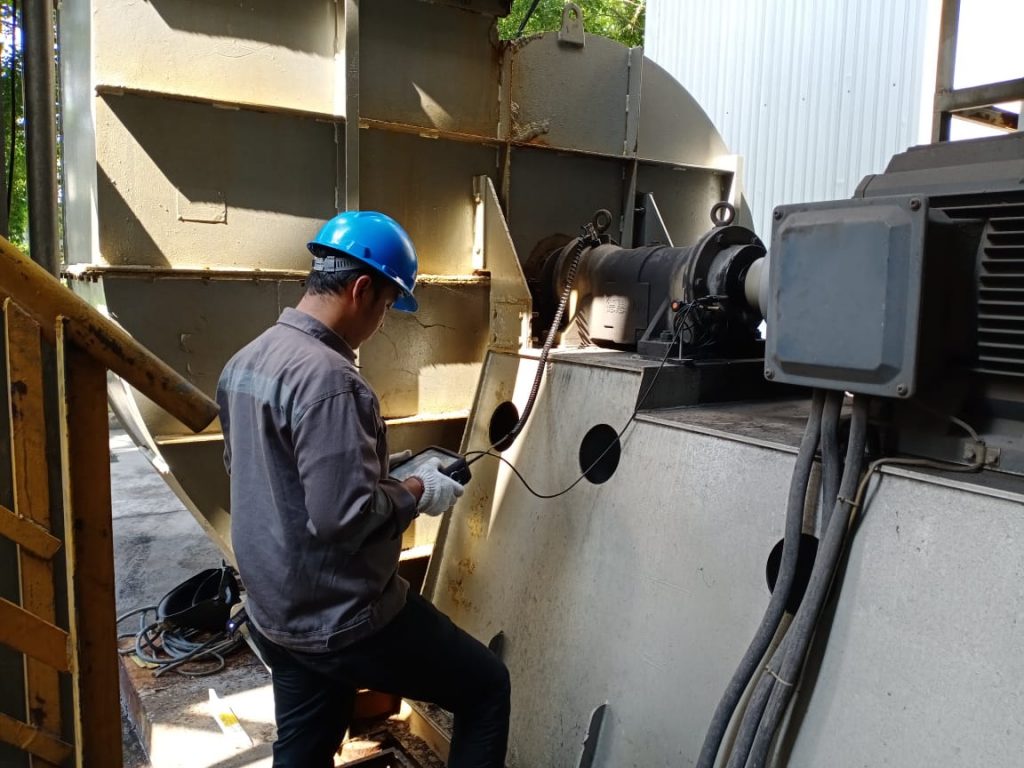
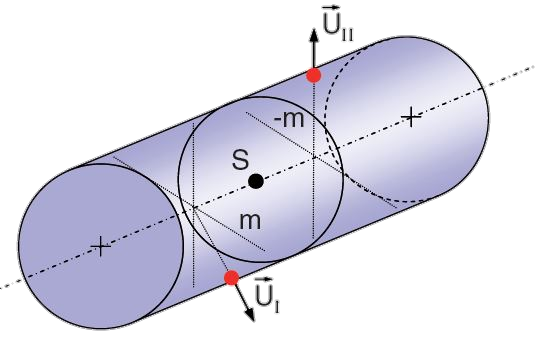
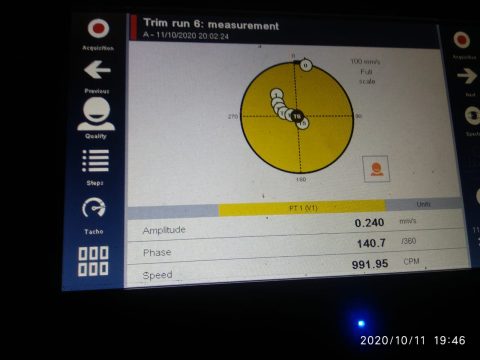
On-site balancing is used to to determine the location and amount of unbalanced masses on a rotor. Unbalance is defined as the unbalance distribution of mass with respect to the centerline of a rotor. Unbalance is one of the most common problems experienced by rotating equipment in all types of industries.
PT Putranata Adi Mandiri provides on-site balancing services throughout Indonesia to optimize engine performance in the industrial world
On-site Balancing Advantage
Balancing is done with the actual rpm of the engine
Balancing can be done anytime and anywhere
Reduce time and cost for machine overhaul
Unbalance
Unbalance can be caused by an uneven distribution of the rotor mass or an improperly centered shaft. In the turbine rotor, unbalance can also be caused by the blades being eroded due to erosion by the fluid. This defect phenomenon often occurs in rotating machines, which is one of the main causes of vibration. Unbalance itself is one of the most common problems experienced by rotating equipment in all types of industries.
Rotating Machine Balancing
The rotating part of the machine called the rotor must have a good balance so that the engine performance runs smoothly. However, over time of course the rotation of the engine rotor will lose balance so it must be rebalanced. To rebalance the rotor, a balancing process is needed.
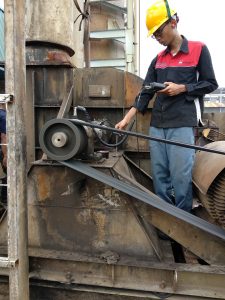
Cooling Tower Balancing
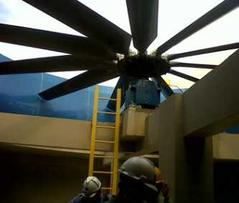
What is a cooling tower and what does it do? All cooling towers are used for heat rejection in industrial plants, hospitals or other large buildings. Heat is removed from the working fluid (water) to the atmosphere (air) by evaporation (wet) and convection (dry). Two types of cooling towers are: natural draft & induced draft.
Natural draft – no fan required. Air flows due to the design of the tower and the difference in air density/temperature.
Induced draft/forced draft – Fan is needed to allow air to flow through the tower.
What problems generally occur in cooling towers?
There are several problems that often occur in cooling towers based on mechanical components:
Tower structure (loose, damaged or missing beam), fan shroud, motor (mechanical and electrical), fan drive problem (shaft or pulley misalignment), gearbox (bearing or gear wear, lubrication), fan wheel or hub & blade (fan unbalance) , blade cracking, difference in elevation angle between blades), fill material, water piping & drainage.
Cooling Tower Inspection
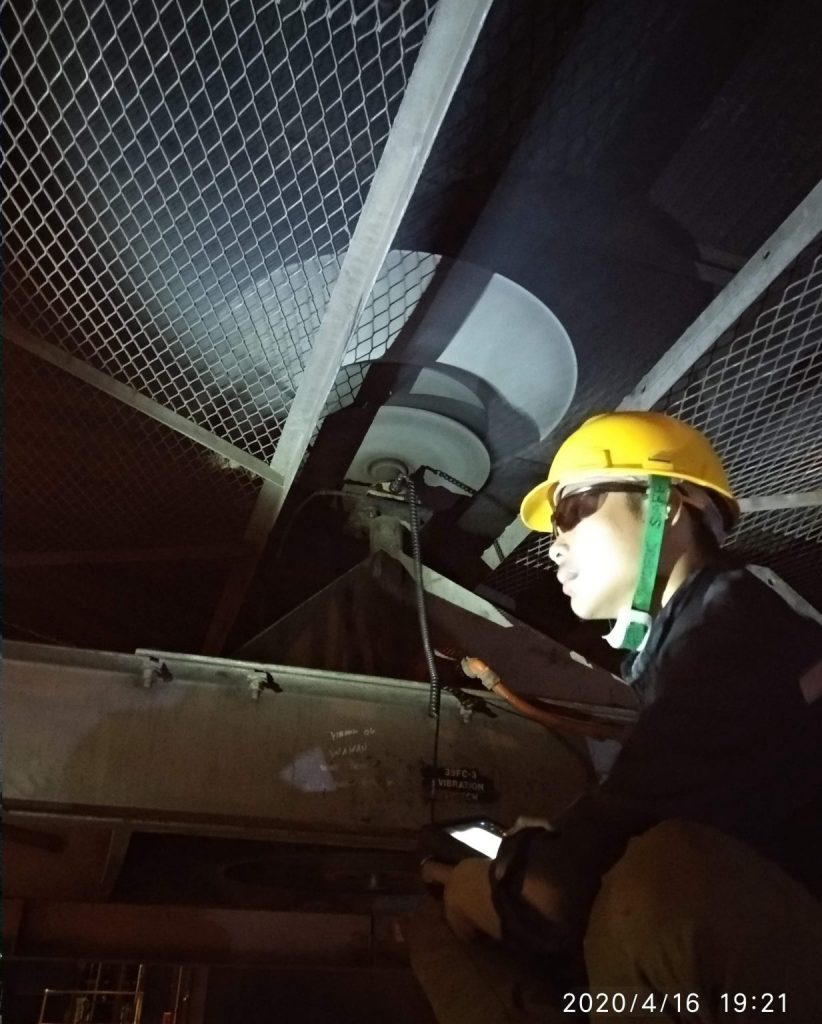
Install the vibration sensor on the gearbox or fan bearing. At least one sensor is required on the gearbox and it is recommended to install more sensors on the gearbox with tiered stages. Sensor locations generally mounted on a flat surface or close to the input shaft. Mount the sensor with stud mounting.
Monitor vibration periodically (at least once a week).
Perform an oil analysis on the gearbox at least every 6 months. Follow the OEM recommended procedure for oil changes.
Perform a visual inspection of the fan when operating at least once every 3 months.
Primary Air Fan Balancing
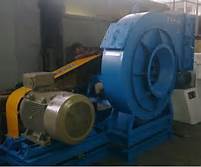
Primary Air Fan functions as a primary air producer which is used as air transporting coal powder from the Pulverizer to the Burner to be burned in the Boiler Furnace.
Blower Balancing
Dynamic balancing extends the life of your equipment by eliminating vibrations that destroy mechanical components. We can balance rotors in their own bearings or on our fleet of portable balancing machines. Our balancing machines are available for on-site balancing worldwide. Precision On-site Balancing drastically reduces downtime and repair costs, while increasing your productivity. Our staff brings extensive balancing experience to your plant for nearly every type, shape and size of rotor, from nuclear turbines to mill paper rolls, and turbine/compressor expanders for conventional fans.
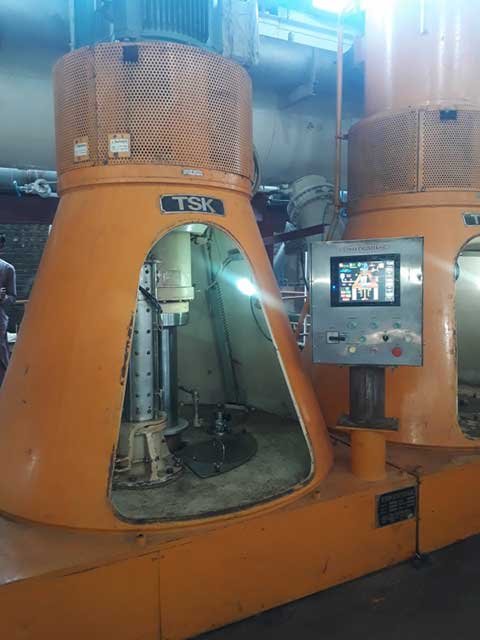
Balancing TSK Machine
TSK machine is included in balancing Basket, balancing Vertical Machine.